With the US and Iran finally aligning on the roadmap for a final agreement, both teams are now diving into the nitty-gritty of implementation. This progress is slowly clearing the bottlenecks at one of the world’s most critical energy trade chokepoints.
On June 23rd, Iran’s Deputy Foreign Minister and head of the technical negotiation delegation, Ghorbani-Babadi, shed light on how future technical consultations between Tehran and Washington will be structured.
Based on a four-party consensus reached in Switzerland, upcoming negotiations will be overseen by a high-level committee. This group includes the Iranian Speaker of Parliament, the Iranian Foreign Minister, the US Vice President, along with the Prime Ministers of Pakistan and Qatar. They’ve also agreed to set up four dedicated working groups to tackle: sanctions relief, nuclear issues, reconstruction and economic development, and monitoring and enforcement.
Crucially, a liaison point focused on the management of the Strait of Hormuz will be established between Iran and the US. This is designed to handle vessel issues or emergencies within a 30-day window. Additionally, a de-escalation group for the Lebanon conflict will be set up involving Iran, the US, Pakistan, and Qatar.
Babadi also revealed that the US has issued licenses for the sale of certain oil products, valid until August 21st. Furthermore, parties have agreed to activate previously frozen funds totaling $12 billion (split into two tranches of $6 billion each), which will immediately enter the execution phase.
According to reports from CCTV, Iran’s chief negotiator and Speaker of Parliament, Mohammad-Bagher Ghalibaf, made it clear that the management of the Strait of Hormuz will never revert to its pre-conflict status. Instead, under the framework of international law, the strait will be managed by Iran according to its own established mechanisms.
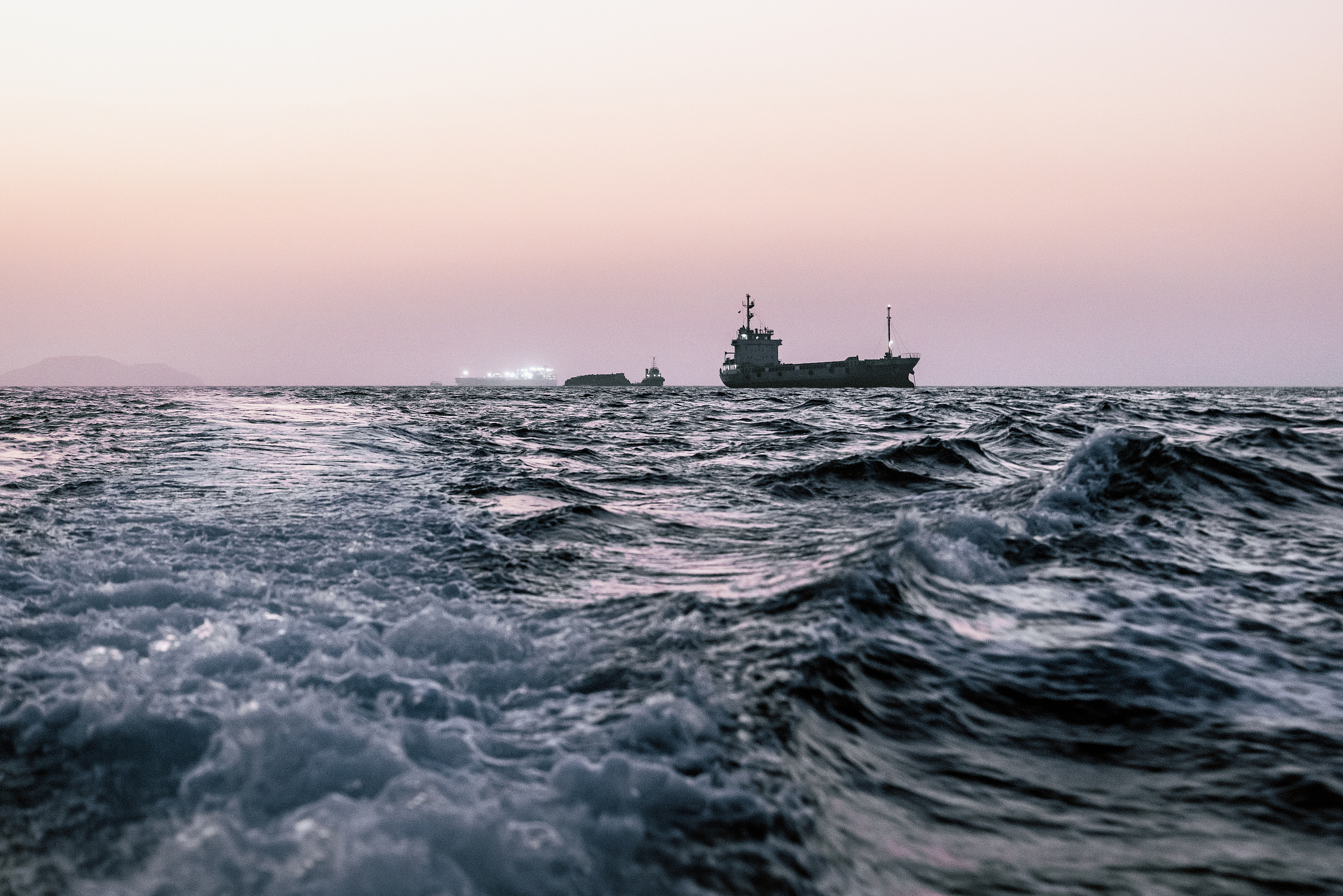
Previously, Iran stated that all commercial vessels must coordinate with its relevant authorities when passing through the strait. However, within the 60-day Memorandum of Understanding (MoU) framework signed last week, no fees will be charged to these vessels.
Last month, the Iranian government announced the creation of a new body, the “Persian Gulf Strait Authority,” to manage the Hormuz Strait. Under the通行 requirements issued by this authority, vessel transit applications must be submitted at least 48 hours before arriving in the Hormuz Strait area.
On the US side, sources indicate that transit volume through the Strait of Hormuz has increased over the past week, though it remains significantly below the pre-conflict average of about 135 ships per day. Data from the maritime tracking website MarineTraffic shows a noticeable spike in activity between June 19th and 21st, with 71 transits recorded, peaking at 35 on June 20th.
Multiple industry insiders point out that restoring normal flow through the strait will be a complex process in practice, requiring a phased approach.
According to the MoU text disclosed by Iran’s state news agency, IRNA, Iran will make every effort to arrange for commercial ships to pass freely from the Persian Gulf to the Gulf of Oman within 60 days. Given that Iran needs to clear technical and military obstacles, including mines, normal traffic is expected to resume within 30 days.
Industry consensus suggests that oil tankers and LNG carriers will get priority clearance due to their critical role in global energy supply, while container ships and other cargo vessels may face longer wait times.
A report released earlier this week by commodities data firm Kpler revealed that around 118 loaded oil tankers are currently stranded in the Persian Gulf, waiting to pass through the Strait of Hormuz. Clearing this backlog is estimated to take another 10 to 15 days. If hundreds more ships arrive simultaneously, the queuing order will become a key factor affecting the efficiency of shipping recovery.
Goldman Sachs, in its own report, noted that future crude oil flow through the Strait of Hormuz might only recover to about 70% of pre-conflict levels, establishing a new equilibrium. Shipping volumes are expected to gradually recover by the end of next month, while oil production in Gulf states is anticipated to return to normal by October.
The Lloyd’s Market Association in the UK issued a statement emphasizing that the primary condition for restoring passage for the 110-day stranded vessels is providing stability and certainty for shipowners and insurers. Due to vessel misplacement and distorted supply chains, it will take several months for international shipping to return to a semblance of normalcy.
On June 16th, Chinese Foreign Ministry spokesperson Lin Jian stated at a regular press conference that the Strait of Hormuz is a strait used for international navigation, and early restoration of safe and free passage is in the interest of all parties. International Energy Agency Executive Director Fatih Birol also recently declared that the Strait of Hormuz must be reopened unconditionally.
Meanwhile, the situation in Lebanon has shown signs of calming down. Both sides have agreed on establishing a mechanism to end the conflict between Israel and Hezbollah in Lebanon.
US officials stated that, given repeated violations of ceasefire agreements by Israel and Lebanon’s Hezbollah which threaten the US-Iran negotiation process, the US has established a “monitoring mechanism” for the Lebanon situation. This allows decision-makers to grasp real-time and accurate details of combat activities within Lebanon.
However, Israeli Prime Minister Benjamin Netanyahu reiterated in a statement that Israeli troops operating in southern Lebanon are not restricted in eliminating security threats, firmly asserting that the Israeli military will maintain a long-term presence in the so-called security zones.