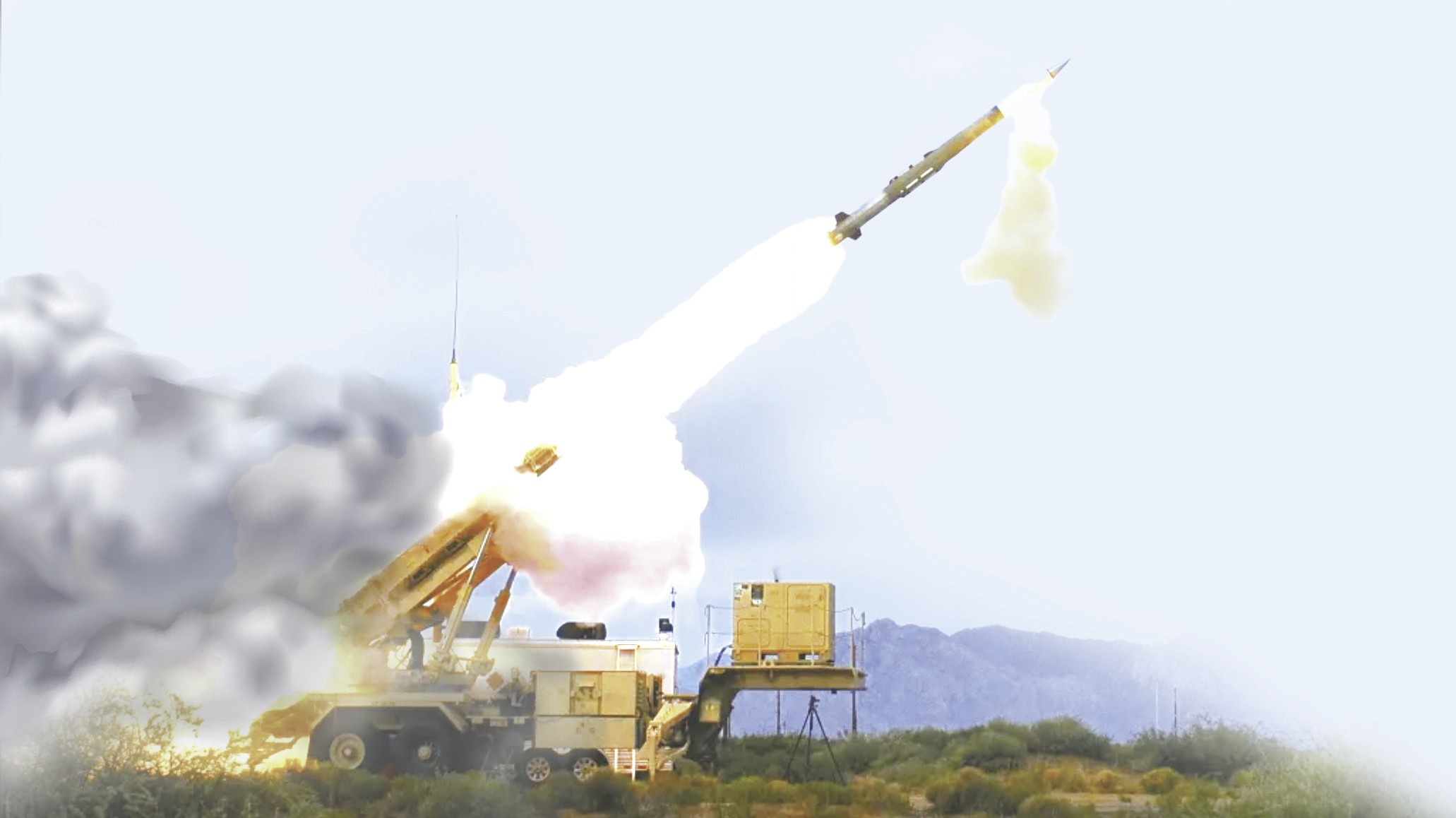
On August 16th local time, right as the annual Ulchi Freedom Shield (UFS) joint military exercises kicked off between South Korea and the United States, President Trump took to his social media platform to announce a major shift. He declared that he had instructed Secretary of Defense Hegseth to significantly scale back the scale of these drills.
Trump described the joint exercises as sending an extremely inappropriate and hostile signal to a nation that, in his view, has shown respect toward the U.S. and posed no threat since he took office. He also voiced frustration over Seoul’s refusal to support American efforts to denuclearize Iran. This abrupt move has captured global attention, with many analysts interpreting it not just as a friendly gesture toward Pyongyang, but perhaps more pointedly, as a way to pressure Seoul. Key issues like South Korea’s slow progress on promised U.S. investments and its decision to sit out certain U.S.-led military actions regarding Iran are likely fueling this friction. These tensions are pulling at the threads of the long-standing defense, economic, and diplomatic ties between the two allies, raising concerns in Seoul about the reliability of the U.S. security umbrella.
During a press conference on August 17th, Chinese Foreign Ministry Spokesperson Lin Jian commented that China has taken note of the reports. He reiterated that maintaining peace and stability on the Korean Peninsula and promoting a political resolution to the issues aligns with the common interests of all parties involved.
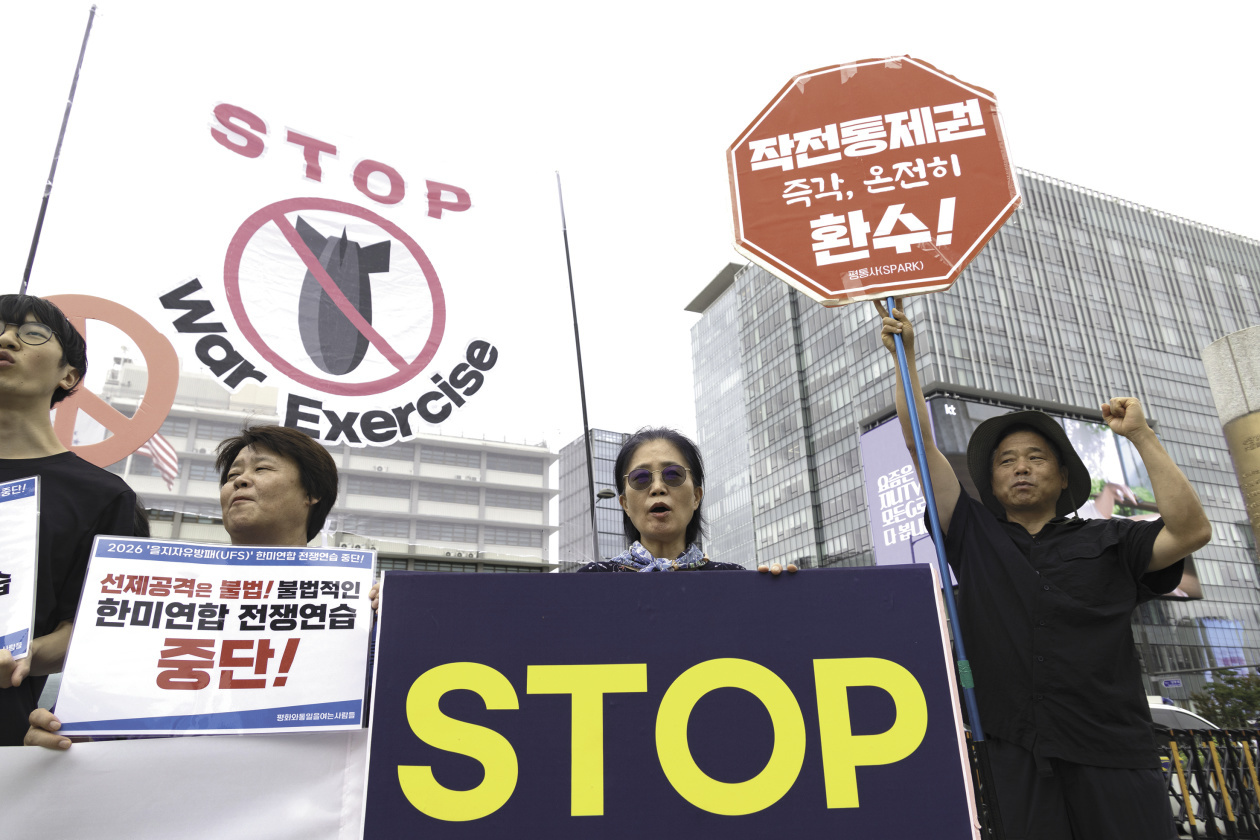
On August 17th, members of a civic group in Seoul staged a protest outside the U.S. Embassy, chanting slogans against the Ulchi Freedom Shield drills.
Seoul’s Official Reaction
In his social media post on the 16th, Trump cited his excellent relationship with North Korean leader Kim Jong-un as a primary reason for his discontent with the long-running military exercises. He argued that these drills are not only prohibitively expensive—with the U.S. footing most of the bill—but also send a counterproductive signal. Noting that it was too late to call off the exercises entirely, he said he had directed Secretary Hegseth to significantly reduce their scope.
His comments came just as the UFS exercises began on the 17th. According to Yonhap News Agency, the drills are scheduled to run until August 27th, involving about 18,000 South Korean troops. The training scenarios incorporate lessons learned from recent conflicts, and the allies plan to conduct 14 combined field training exercises at the brigade level or higher. The U.S. Eighth Army stated the exercises include rapid army deployment to demonstrate the alliance’s ability to quickly project power and secure key terrain within the first island chain. However, the U.S. Forces Korea public affairs director, Ryan, stated at a press briefing that the UFS drills are designed to address security threats facing the peninsula.
In response to Trump’s post, Seoul’s presidential office stated on the 17th that it is closely monitoring the situation. They expressed hope that the friendly relationship between the U.S. and North Korean leaders could translate into meaningful dialogue, facilitating discussions on peace and stability. South Korea pledged to continue its role as a facilitator in U.S.-North Korea talks, operating within the framework of close coordination with Washington. Regarding the potential reduction in drill scale, the office said that the ROK-U.S. alliance maintains close coordination on maintaining a solid combined defense posture and conducting joint exercises, and they will continue to cooperate on specific details.
The South Korean Defense Ministry also responded on the 17th, confirming that the ongoing exercises were proceeding normally and that no specific requests for adjustments had been received from the U.S. side. As of that day, neither military had clarified which specific drills, personnel, or equipment would be affected by the reduction.
Will U.S.-North Korea Dialogue Resume?
Yonhap noted on the 17th that, given North Korea’s strong prior protests against the joint drills, Trump’s latest statements could be perceived as a conciliatory gesture towards the North. With Trump specifically highlighting his personal relationship with Kim Jong-un, speculation is high about the possibility of renewed U.S.-North Korea dialogue. The news agency recalled that in 2018, following his Singapore summit with Kim, Trump announced the suspension of what he called provocative and costly joint military exercises. This led to a period where the allies’ drills were scaled back or cancelled, focusing primarily on computer-simulated command post exercises until 2022, when larger field training resumed. Now, it seems history might be repeating itself.
Just a day before announcing the drill reduction, Trump also shared a photo on social media from his 2019 meeting with Kim at the inter-Korean border, commenting that they got along well. This follows a post from June where he shared a photo from their 2018 summit. This repeated posting of past summit photos is seen by many as a move to warm up his so-called “North Korea card.” Yonhap suggested that Trump might be aiming to tout his diplomatic achievements, positioning himself as the only Western leader to have established a good rapport with Kim, and potentially signaling his intent to pursue another summit.
The Hankyoreh newspaper offered a different perspective, suggesting that Trump’s sudden pivot towards North Korea could be linked to the prolonged situation in Iran. With the conflict there entering its sixth month and midterm elections looming, Trump might be seeking a way to shift domestic attention away from the war and create a tangible foreign policy win for his agenda. Resuming U.S.-North Korea summits could serve that purpose.
However, many analysts are skeptical that this will be enough to reopen dialogue. The Kyunghyang Shinmun pointed out that North Korea has enhanced its capacity to withstand U.S. sanctions pressure. Unless the U.S. accepts its status as a nuclear power, Pyongyang may have little incentive to return to the negotiating table.
In a statement carried by KCNA on the 14th, a North Korean Foreign Ministry spokesperson condemned the UFS drills as a rehearsal for an invasion war, accusing the U.S. of trying to restore military hegemony and unilateral deterrence on the Korean Peninsula, a scheme they vowed would never succeed.
Yonhap also highlighted a separate KCNA article from the 14th, featuring a military commentator who warned that the U.S. is discussing new nuclear strategies focused on low-yield tactical weapons. The article claimed the U.S. is increasing the potential for nuclear weapons use, engaging in secretive consultations with South Korea like the Nuclear Consultative Group (NCG), and providing so-called extended deterrence to Japan. This suggests the Korean Peninsula might be the primary focus of these new U.S. nuclear strategies. The article reiterated North Korea’s commitment to bolstering its self-defensive nuclear deterrence to thwart any nuclear threats.
South Korea as the Scapegoat?
Bloomberg, citing senior geopolitical analyst Farrall, noted that North Korea is in a stronger negotiating position than during Trump’s first term and has shown little interest in resuming talks. This suggests Trump’s demand to scale back the drills might be less about appeasing Pyongyang and more about expressing dissatisfaction with Seoul.
In his August 16th post, Trump brought up a point he claimed was unrelated to his decision on the drills. He mentioned asking the South Korean president whether Seoul would join the U.S. in actions to denuclearize Iran, to which he said the response was, “No, thank you!”
Seoul’s office responded on the 17th, explaining that South Korea has been actively participating in international discussions to broker a ceasefire in Iran and restore freedom of navigation in the Strait of Hormuz. They stated that concrete and military contributions are being closely coordinated with the U.S., taking into account South Korea’s own defense readiness and domestic legal procedures.
An article in The Atlantic on the 16th was bluntly titled, “Trump Makes South Korea Pay for His Iran Humiliation.” It argued that Trump recklessly initiated a war with Iran, and now that the U.S. is losing that conflict, he is looking for a scapegoat.
Professor Kelly from Pusan National University in South Korea commented to Al Jazeera on the 17th that Trump is currently in a bind, and South Korea is seen as a convenient scapegoat to divert attention. He noted that Trump has previously attacked NATO allies in a similar manner for comparable reasons.
Beyond the Iran issue, Washington has also been vocal about Seoul’s delay in fulfilling its investment promises. Reuters reported on the 17th that the Trump administration has long had friction with South Korea over cost-sharing for U.S. troops stationed there. There are also broader economic tensions, particularly regarding Seoul’s slow progress on a $350 billion investment commitment made under a trade agreement signed last year, which was meant to lower U.S. tariffs on South Korean cars. The details of this investment plan have yet to be publicized. A former U.S. official from Trump’s first administration suggested that Trump feels frustrated with what he perceives as Seoul’s stubbornness.
South Korea’s Newsis news agency highlighted that the most direct and significant point of contention is the sluggish pace of South Korean investment in the U.S. Citing a South Korean government source, the report noted, “The core reason for the friction in ROK-U.S. relations is the U.S. dissatisfaction with the slow investment. Other issues have only played a secondary role.”
The Seoul Economic Daily reported on the 17th that it’s worth noting South Korean President Lee Jae-myung had mentioned in December of last year that Seoul could consider adjusting the joint military exercises if it helped create conditions for U.S.-North Korea dialogue. Therefore, the reduction itself might not necessarily conflict with Seoul’s policy towards the North. The real controversy lies in whether the decision was made through sufficient consultation between the allies, and why such a significant matter affecting alliance security was unilaterally announced by Trump via social media.
The report further expressed concern that Trump’s move could signal a reshuffling of U.S. military assets in the Asia-Pacific due to pressures from the Middle East conflict. The U.S. plans to deploy the nuclear-powered aircraft carrier USS George Washington from its base in Yokosuka, Japan, to the Middle East to relieve the USS Lincoln, which has been on an extended deployment. The report quoted a senior analyst from the International Crisis Group, who warned that the departure of the last U.S. carrier in East Asia, combined with the reduction in the scale of the joint exercises, would further fuel doubts about the credibility of U.S. security commitments.