Starting in July, Ukrainian President Volodymyr Zelensky has been pleading with the West for more air defense interceptors to counter increasingly intense Russian missile strikes. But the response from Western capitals has been lukewarm at best. After more than four years of conflict, European nations have nearly exhausted their available air defense systems, while the U.S. — juggling both the Ukraine war and Middle East operations — has burned through vast quantities of its own ammunition. The result? The West simply can’t sustain its previous levels of support. Germany’s Die Welt reported that Zelensky is “slipping into despair” over the severe shortage of American-made Patriot interceptor missiles.
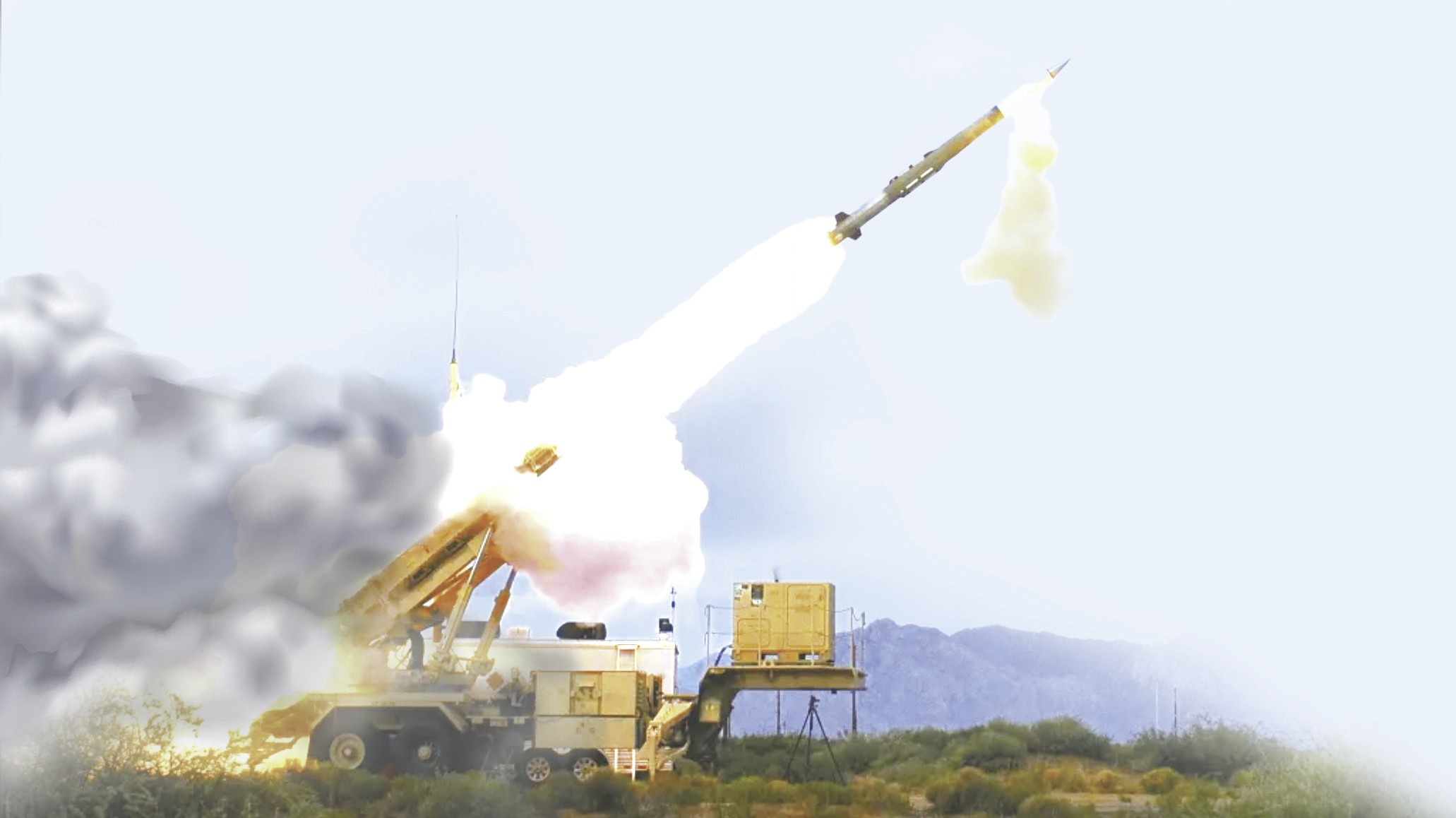
Ukraine’s Air Defense Now Powerless Against Russian Missiles
According to Die Welt, a telling sign of Ukraine’s depleted interceptor stockpile: in recent operations against Russian airstrikes, Kyiv reported shooting down zero ballistic missiles. Ukraine currently operates several Patriot systems donated by the U.S. and Germany — the backbone of its missile defense. But Zelensky revealed that Western allies have supplied only one-quarter of the air defense missiles this year compared to the same period in 2025. In an interview with CNN, he complained that Ukraine has just one-tenth of the Patriot missiles it actually needs. “This year’s deliveries are far below last year’s, while Russia now fires twice as many ballistic missiles per month,” he said. He added that if Washington sold Ukraine just 5% of its current Patriot stockpile, “we could make it through the winter.” And if they sold 10%, “we could intercept every ballistic missile Russia launches.” The reality? Ukraine has barely 1%.
This shortage has sent Ukraine’s interception rates into freefall. According to Ukraine’s Defense Ministry, Russia launched 195 ballistic missiles in July, and Kyiv managed to intercept just 29 — a meager 14.9% success rate. August is looking even worse: during airstrikes on August 1 and 5, Ukrainian forces failed to intercept nearly all of the dozens of incoming missiles. The Financial Times reported that Ukraine’s Patriot systems have been completely idle for the past month due to lack of ammunition. Former NATO Supreme Allied Commander Europe, retired U.S. Admiral James Stavridis, revealed that Ukrainian forces are forced to fire just one Patriot interceptor for every 27 incoming ballistic missiles.
Germany’s Frankfurter Allgemeine Zeitung noted that Ukraine’s military can no longer shoot down ballistic missiles. As a result, the Ukrainian Air Force has stopped publishing missile launch statistics in its morning briefings, making it impossible for outsiders to assess the current effectiveness of its missile defense.
CNN pointed to a major culprit: the U.S. military campaign against Iran. To counter Iranian missiles and low-cost drones, the U.S. and Gulf states have launched massive numbers of air defense missiles, draining even America’s own stockpiles of Patriot, THAAD, and other interceptors. Against this backdrop, the Pentagon and U.S. think tanks are urging Washington to prioritize rebuilding its own missile defense reserves.
After a meeting with President Trump on the sidelines of the NATO summit in Ankara, Turkey, Zelensky said Trump had agreed to grant Ukraine a license to produce Patriot missiles. But Trump later told the Financial Times he was “not sure” about that, calling the Patriot “a very special weapon” and stressing that “we have to be careful about who we authorize.” White House Press Secretary Karoline Leavitt, responding to Zelensky’s requests, said the U.S. military leadership’s top priority remains restoring and strengthening America’s own defense capabilities.
The Frankfurter Allgemeine Zeitung reported that European nations face similar struggles. After delivering massive amounts of air defense hardware in earlier aid packages — and with no end to the conflict in sight — European support is rapidly fading. Germany, for instance, has supplied Ukraine with at least 10 IRIS-T SLM medium-range systems and 2 Patriot batteries. Now German officials admit the country has “reached its limit,” having sent more air defense systems than Berlin has left in its own reserves. Even Poland, which handed over just 5 Patriot-3 interceptors, triggered a domestic political backlash.
Russia’s Shift to Cost-Effective Mass Production
Russia’s Komsomolskaya Pravda reported that Moscow’s large-scale strikes on Ukraine rely on three main munitions: long-range suicide drones, ballistic missiles, and cruise missiles. And in recent attacks, the munitions have been steadily upgraded, making Ukraine’s air defense job even harder.
The Financial Times revealed that Ukrainian intelligence says Russia launched a record 198 ballistic and hypersonic missiles in July. “Russia produces about 60 ballistic missiles a month, but fired at least 65 in July alone.” Ukraine’s Defense Intelligence Directorate disclosed that, seeing Kyiv’s growing inability to intercept ballistic missiles, Russia has completely halted production of its expensive and underwhelming Kh-47M2 Kinzhal air-launched hypersonic missiles. Instead, Moscow has redirected production capacity toward the Iskander-M tactical ballistic missile — cheaper, easier to manufacture, and more flexible — signaling a deliberate pivot to a war of attrition built on volume and cost-effectiveness.
At the same time, Russian forces are deploying upgraded jet-powered Geran-series drones at massive scale. These new versions fly far faster than the traditional piston-engine models. According to Ukrainian intelligence, production of the jet-powered Geran-4/5 has reached roughly 3,000 units per month, surpassing the Geran-2’s monthly output of around 2,800. In other words, the jet variant has overtaken the conventional model.
These jet-powered drones now make up a rapidly growing share of Russian airstrikes, accounting for up to two-thirds of all drones launched in some attacks. Their speed has jumped from roughly 150-200 km/h to 600 km/h, rendering Ukraine’s electric interceptor drones — once effective against slow-moving suicide drones — largely useless. Kyiv has been forced to rely far more heavily on expensive air defense missiles, further draining its already strained stockpiles.
Following the same attrition logic, Russia has also begun mass-producing a new type of cheap cruise missile nicknamed the “small package.” Built largely from civilian-grade components, these missiles cost only about $150,000 apiece, according to Ukrainian estimates. Using a hybrid inertial + GLONASS satellite guidance system, they’re designed to strike pre-programmed fixed targets. They fill the gap between Russia’s cheap, slow Geran drones and its expensive, high-end Kalibr cruise missiles.
West Helps Ukraine Revive Soviet-Era Missiles
With Russian strikes intensifying and Western allies unable to produce or supply advanced interceptors fast enough, Ukraine has been forced to modernize its Soviet-era air defense missiles with Western technical support.
Russia’s Kommersant reported that Ukraine and the U.S. have launched a joint modernization program for Ukraine’s S-300 long-range air defense systems. Before the war, Ukraine operated roughly 25-30 S-300 variants. Though some were lost in combat, Kyiv still retains a significant number of command cabins, launchers, and radars. The American approach: first refurbish the old S-300 missiles, replacing degraded solid fuel and installing new electronics. Then, develop a new missile fitted with Western seekers that’s compatible with existing S-300 launchers. Through this program, Ukraine could reportedly produce 100 to 300 interceptors per year.
But such a limited modernization effort is nowhere near enough to meet Ukraine’s actual needs. Defense News reported that nine nations — Denmark, France, Germany, Italy, the Netherlands, Norway, Spain, Sweden, and the UK — have joined forces with Ukraine on the “Freya” air defense system. Also based on Ukraine’s S-300 platforms, the goal is to develop a lower-cost, higher-volume missile defense system to complement the American Patriot.
Ukraine hopes to conduct its first intercept test in July 2027 and achieve operational capability within a year. The missile is expected to cost around $1.2 million per unit — a fraction of the Patriot’s nearly $3.8 million price tag.