

In a statement on August 2 (EST), President Trump touched on Iran, claiming that a deal on the Strait of Hormuz is already in place and that an agreement on denuclearization will follow. He added that the US will sit down with Iran for talks the very next day. So far, Tehran has not officially responded to this.
The growing sense of détente in US-Iran relations is also fueling optimism about navigation through the Strait of Hormuz.
On the same day, Iran’s Foreign Ministry noted that negotiations with Oman on jointly managing the Strait of Hormuz have entered their final stage and are nearing completion. Both sides are currently discussing shared principles and operational mechanisms for ensuring safe shipping through the strait.
As these calming signals kept piling up in quick succession, the capital markets wasted no time reacting.
On the morning of August 3, international oil prices took a nosedive at the open, with Brent crude’s October futures contract briefly tumbling 7.3% to $81.55 per barrel—one of the sharpest single-day drops in recent memory. WTI crude also fell below the $80 mark, sliding 6.25%.
Just last Friday, the situation had been incredibly tense. On July 31, Trump suddenly claimed he was “seriously considering” launching strikes on Iranian energy facilities within the coming days, with operations potentially kicking off as early as the past weekend and stretching over several days.
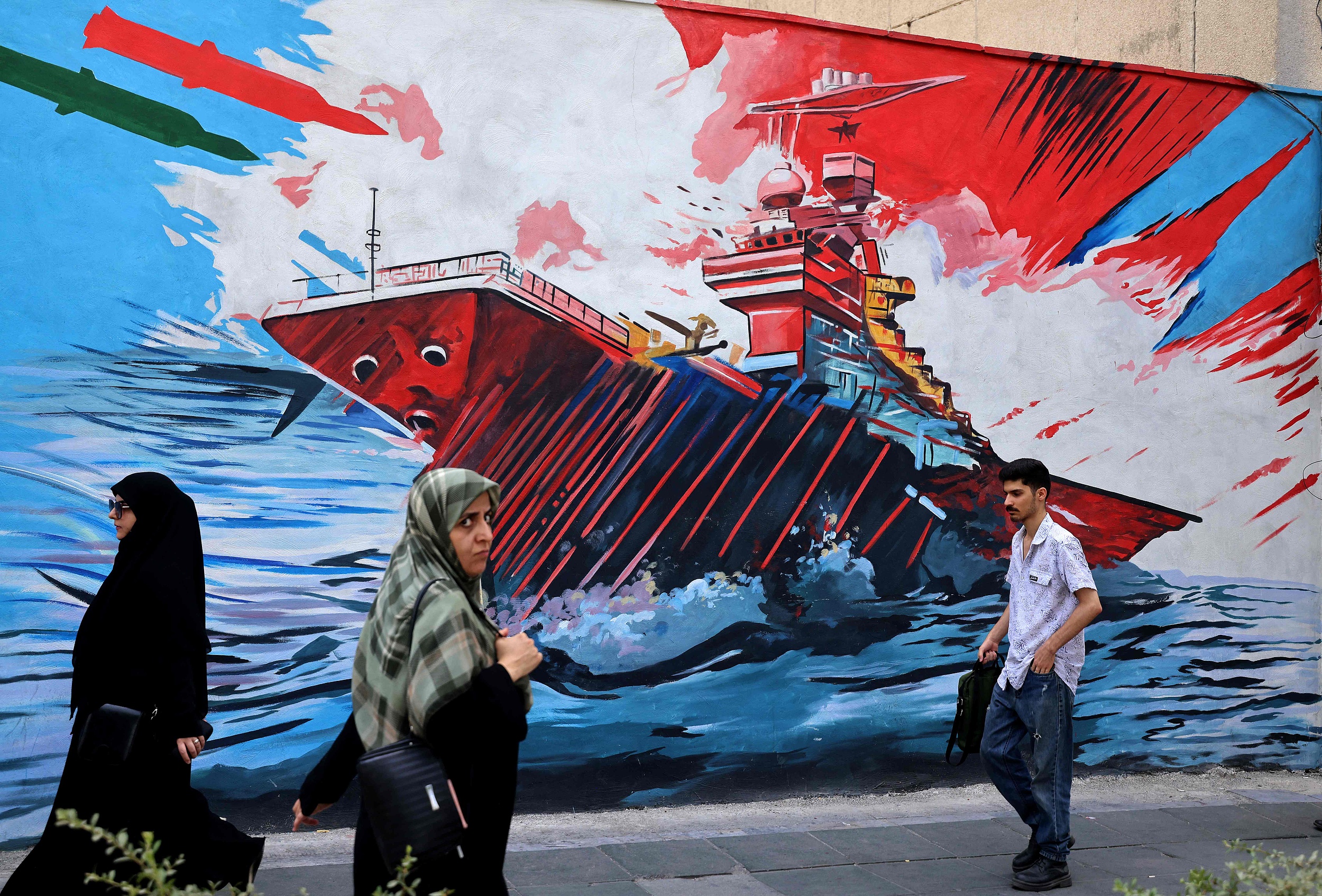
On August 1, US embassies in Egypt, Saudi Arabia, Kuwait, Jordan, Bahrain, Qatar, the UAE, Iraq, Oman, Israel, and other nations issued security alerts, urging American citizens in the Middle East to stay highly vigilant and prepare for possible flight cancellations, temporary airspace closures, and travel disruptions.
Just one day later, Trump took to social media to announce he had agreed to call off the strikes on Iran. Iran’s military, for its part, warned Washington against any reckless moves, vowing a firm and decisive retaliation if provoked.
Trump said: “Iran and other Middle Eastern countries have just asked us to hold off on any attacks, because both sides have agreed on the framework of a deal. This will include the immediate, complete, and full opening of the Strait of Hormuz, as well as ending Iran’s nuclear threat. Based on this request, I’ve agreed to call off the attack—provided a deal can be reached quickly.”
Sources reveal that Saudi Crown Prince Mohammed bin Salman had personally called Trump beforehand, expressing concern over the possibility of US strikes on Iran and urging a de-escalation of tensions.
This isn’t the first time Trump has abruptly reversed course on military action against Iran—it’s at least the second such 180-degree turn. Wall Street has even coined a term for this pattern: the “TACO” moment (short for “Trump Always Chickens Out”).
Still, the trajectory of US-Iran relations could be swayed by other factors, including domestic politics in Israel.
Tensions between the US and Israeli leadership have been simmering for quite a while. Because the war on Iran didn’t deliver the hoped-for regime change and instead triggered Tehran’s move to choke off the Strait of Hormuz—sending global energy prices soaring—domestic pressure in the US has mounted sharply. Trump’s frustration with Netanyahu has finally hit a boiling point.
Multiple Israeli officials say that in the lead-up to Washington’s decision to scrap the planned strikes on Iran, Israel was kept out of the loop for hours and had no idea the US was about to pull the plug.
It’s been learned that Israeli Prime Minister Benjamin Netanyahu, Defense Minister Israel Katz, and others only found out about the US cancellation through Trump’s posts on Truth Social. After that, Israeli military and diplomatic officials scrambled to reach their US counterparts and ultimately confirmed that Trump had indeed changed his mind and scrapped the operation.
On August 2, US Central Command stated on social media that the American maritime blockade on Iran remains in effect. As of that day, US forces had forced 35 vessels to alter course, disabled 2 ships, and conducted boarding inspections on 2 others.