Remember last February when Trump and Zelensky had a heated clash in the Oval Office? Trump famously told the Ukrainian leader, “You have no cards to play,” a moment that left Zelensky awkward and widely mocked. Fast forward to today, and the tone has completely flipped. Trump is now publicly praising Zelensky’s performance in the ongoing conflict with Russia, calling it “commendable.”
“He’s doing pretty well, at least he’s holding his ground. There’s been heavy casualties on both sides, but I think he’s doing a good job,” Trump told reporters at the White House on June 24. It’s quite a turnaround from the earlier harsh criticism.
Analysts point out that while Ukraine seems to be stabilizing its position on the battlefield, its cities remain frequent targets of Russian strikes. Notably, this conflict has now surpassed the duration of World War I, making it one of the longest and most protracted modern wars.
On June 25, reports indicated that Zelensky had announced plans for preemptive strikes against Russian military facilities used in the conflict. Kiev is also intensifying attacks on Russia’s energy infrastructure, hoping to force Moscow to the negotiating table. “I have instructed our intelligence and military sectors to take preemptive action against facilities Russia uses to expand its war operations,” Zelensky stated firmly.
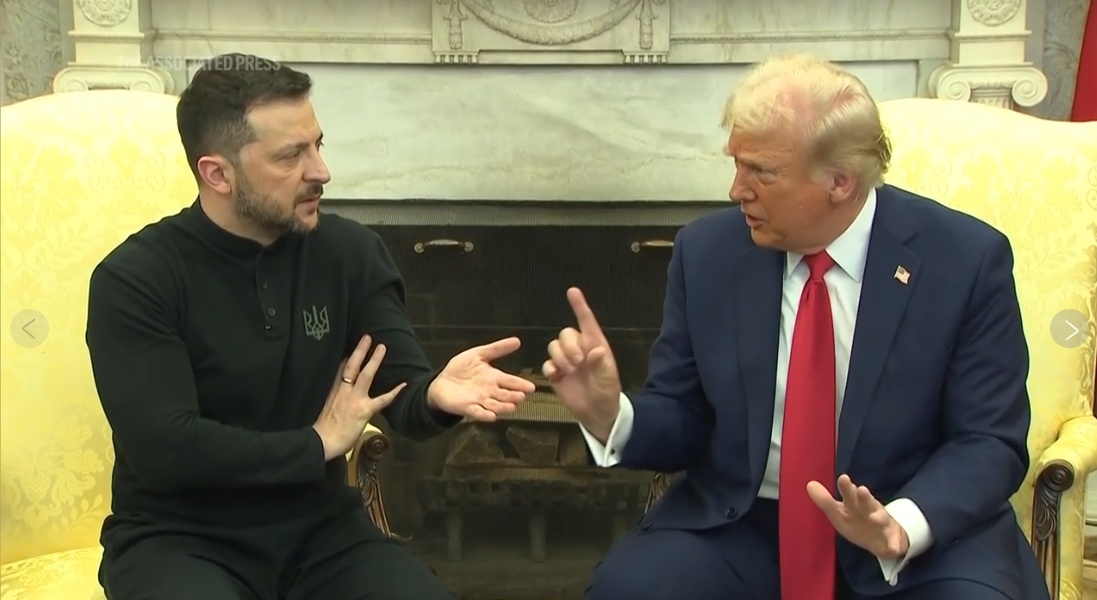
During their 2026 Oval Office clash, Trump and Zelensky exchanged heated words.
The impact of these attacks is already being felt. On June 24, Ukrainian drones caused power outages in Crimea’s largest city and struck facilities in central and southern Russia. As Kiev continues to target refineries and energy assets, Russia is facing a deepening fuel crisis. Insiders reveal that a major refinery in Moscow, severely damaged by drone strikes, will likely be out of commission for at least six months, exacerbating the nation’s fuel shortages.
This aligns with rare official data released on June 24, which showed Russia’s oil product and coke production dropped by 13.5% year-on-year in May, a widening decline. Since 2022, Russia has largely stopped publishing detailed oil production and export data, but these recent figures paint a concerning picture for the world’s third-largest oil producer.
The diplomatic landscape is equally shifting. Trump and Zelensky recently met during the G7 summit in France, where leaders agreed to increase pressure on Russia to end the four-year conflict. Afterward, Zelensky thanked Trump for his attention to Ukraine and his willingness to push for peace.
However, the situation remains complex. Following his meeting with Zelensky, Trump hinted at reconsidering sanctions on Russian oil. Prior to the G7, the U.S. had implemented and later extended sanctions exemptions for Russian oil already in transit, a move that had already caused unease among European allies.