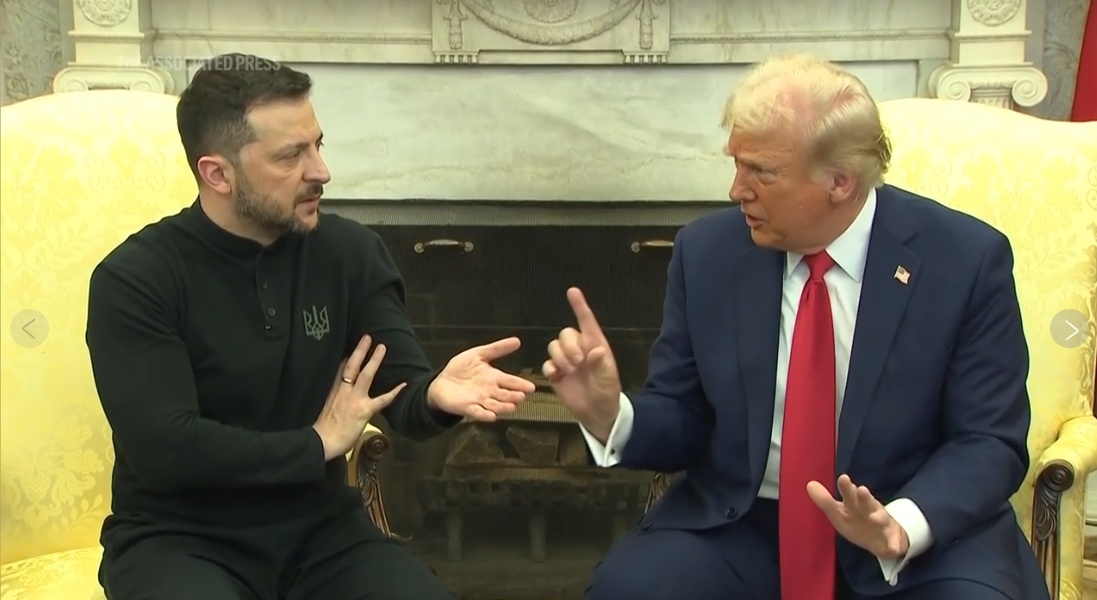
The ongoing US-Israeli military strikes against Iran have dragged on for months, leaving US ammunition stocks dangerously low. HA Viewpoint sees a desperate scramble to replenish supplies as the cost of war mounts.
According to reports, the Pentagon is asking Congress for roughly $80 billion to cover the escalating costs of the Iran campaign. This money isn’t just for bullets; it’s for replacing massive stockpiles of spent ordnance and repairing gear that’s been battered in combat.
Data from the independent tracking site “Iran War Cost” reveals a staggering reality: by May 30, the total cost of US military operations against Iran had already surpassed $95.5 billion. This figure covers everything from equipment损耗 to logistical nightmares.
Consider the intensity of the first 16 days alone: the US military fired more than 11,000 precision-guided munitions. To put that in perspective, the number of “Tomahawk” cruise missiles used was ten times the amount the military typically buys in an entire year.
A May 27 report by the Center for Strategic and International Studies (CSIS) warns that even with maximum effort, US defense contractors need at least three years to replenish the depleted stocks of Tomahawks, Patriot missile interceptors, and THAAD systems.
Given this bottleneck, the White House has been pushing car manufacturers to pivot and start producing missiles, specifically the Patriot system, to boost emergency output.
CCTV News reports that the White House plans to hold a major mobilization meeting with top defense contractors on June 24 (Eastern Time). The goal? To pressure these companies to ramp up production immediately.
President Trump confirmed the meeting a day prior, stating that if car companies have idle capacity, they should be signed up to produce missiles. General Motors (GM) has already shown interest in partnering with Lockheed Martin, the world’s largest defense contractor, to directly build Patriots and Tomahawks.
It’s not the first time GM has worn a military hat. During WWII, GM was America’s top arms manufacturer. While cars are still their bread and butter, they’ve been slowly expanding their defense footprint, launching a dedicated subsidiary called GM Defense nearly a decade ago.
This isn’t just about Iran. The massive volume of US military aid sent to Ukraine over the years has also drained American weapon reserves, including the Army Tactical Missile System (ATACMS) used with HIMARS.
In a bid to fix this, the White House issued an executive order in January banning defense contractors from paying dividends or buying back stocks. The message was clear: stop paying shareholders and start building weapons.
This upcoming meeting is actually the second time the White House has summoned top CEO to discuss this crisis.
Back in early March, right after the war with Iran started, Trump urgently met with seven defense giants to discuss production timelines. Attendees included BAE Systems, Boeing, Honeywell, L3Harris (missile division), Lockheed Martin, Northrop Grumman, and Raytheon.
The Department of Defense is putting intense pressure on these firms to speed up and honor existing “framework agreements.” For instance, a multi-year deal with Lockheed Martin aims to triple the production of PAC-3 Patriot interceptors and quadruple the output of THAAD interceptors.
Meanwhile, a recent report from the Stockholm International Peace Research Institute (SIPRI) highlights the global picture: due to geopolitical tensions and expanding military industrial bases, global military spending hit a record $2.887 trillion in 2025, up 2.9% from 2024.
Germany is seeing similar trends. Historically, its auto industry served war needs, but post-WWII, it was a taboo subject. Now, facing the Ukraine conflict, weak domestic demand, and fierce competition, many German car makers and their supply chains are moving into defense, such as producing components for the Iron Dome air defense system.
Japan’s military-industrial complex is also hitting the gas, rapidly expanding and breaking free from post-war pacifist constraints—a move that raises serious concerns about regional stability. Driven by uncertainty over US security guarantees, Japan’s defense spending reached $62.2 billion, representing 1.4% of GDP, its highest share since 1958.