The “RIMPAC 2026” multinational joint military exercise, led by the United States, officially kicked off on the 24th in the waters near Hawaii. This year’s drill is the largest in history, involving over 30 countries, more than 30 surface ships, 5 submarines, army units from 15 nations, approximately 200 fighter jets, and a total of 30,000 personnel. According to industry observers, the highlight of this exercise is the “sinking” component, where multiple 10,000-ton retired warships will be used as targets and sunk. However, this has sparked dissatisfaction among Hawaii’s local residents and environmental organizations, who held protests on June 28 to voice their concerns.
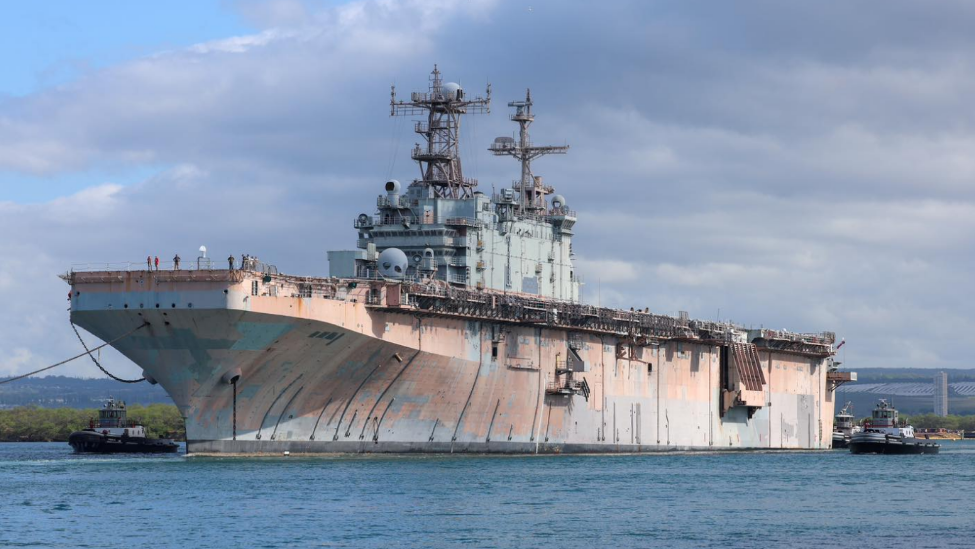
Previous media reports revealed that the retired ships acting as targets this year include the 40,000-ton Tarawa-class amphibious assault ship “Peleliu,” whose tonnage is equivalent to that of a medium-sized aircraft carrier.
The US Naval Institute website notes that the 2026 RIMPAC exercise is hosted by the US Pacific Fleet. The US military has deployed a massive formation, including the nuclear-powered aircraft carrier “Roosevelt,” as well as multiple amphibious assault ships, missile cruisers, destroyers, and nuclear submarines. Notably, the Republic of Korea Navy is taking command of the maritime combat forces for the first time, sending its most advanced active-duty Aegis destroyer “King Jeongjo,” the Daegu-class missile frigate “Daejeon,” the Cheonchupung-class tank landing ship “Cheonchupung,” and the Dosan Ahn Changho-class conventional submarine. South Korea has become the country other than the US with the highest number of deployed ships. However, analysts point out that while the number of participating nations is high, the overall quality of the participating vessels has not improved, suggesting that many countries are merely there to “make up the numbers.”
According to a press release from the US Pacific Fleet, this year’s RIMPAC will cover a wide range of scenarios, including amphibious operations, artillery and missile firing, anti-submarine warfare, air defense drills, military medicine, humanitarian assistance and disaster response, anti-piracy, mine countermeasures, explosive ordnance disposal, and diving and salvage operations. However, the core focus remains the so-called “sinking” component, which involves repeatedly attacking target ships using various active anti-ship weapons from the US and its allies.
Earlier reports indicated that the retired ships serving as targets this year include the Tarawa-class amphibious assault ship “Peleliu,” the Ticonderoga-class cruiser “Mobile Bay,” and the San Antonio-class amphibious transport dock “Junon.” Among them, the “Peleliu” displaces 40,000 tons, comparable to a medium aircraft carrier. The “Mobile Bay” marks the first time a US Aegis cruiser has served as a target in the “sinking” exercise, highlighting the US Navy’s emphasis on this live-fire drill. Analysts suggest that the “sinking” component, which uses retired warships as targets, is typically restricted to the US and its core allies to test the actual striking effectiveness of their anti-ship weapons. Additionally, since these US vessels were decommissioned relatively recently, the military is also using this opportunity to assess the damage resistance of its active main fleet ships.
However, the environmental hazards posed by the “sinking” component are drawing attention from all sides. Local residents and environmental organizations in Hawaii plan to protest on June 28. Although the US Navy claims to have “decontaminated” the target ships, including clearing residual fuel and lubricants, various industrial products and heavy metals on board will continue to pollute the underwater environment after the ships sink. Furthermore, the shockwaves from explosions during the “sinking” exercise not only harm nearby marine life but also produce significant chemical byproducts, directly polluting seawater and海底 sediment.