High-ranking American officials revealed on the 28th that the US and Iran have agreed to cease mutual attacks and will resume peace negotiations in Doha, Qatar, on the 30th. Reports suggest that this restoration of diplomatic contact offers a glimmer of hope for saving the temporary ceasefire agreement reached by both sides. Just a day prior, renewed hostilities had threatened to undermine the memorandum of understanding (MOU), which had been in place for less than two weeks. Nevertheless, Iranian Deputy Foreign Minister Qaribabadi stated on the 29th that claims of technical negotiations taking place in Doha that week were false.
Trump Confirms Negotiation News
US President Trump took to social media on the 29th, announcing that Iran had requested talks, which are set to begin “tomorrow in Doha, Qatar.” According to Axios, a senior US official disclosed that Washington and Tehran have agreed to stop attacking each other, with technical talks focusing on the Strait of Hormuz scheduled for June 30. Sources indicate that due to recent escalation, the negotiation focus has shifted toward the strategic waterway.
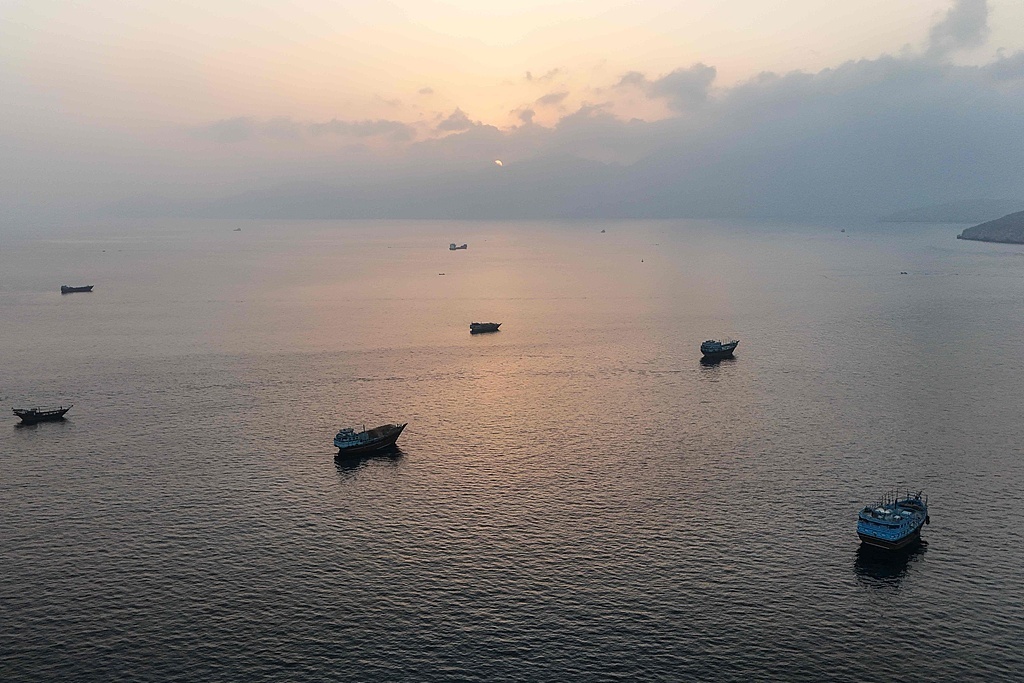
On the same day, another Trump administration official told Reuters that the US and Iran would continue technical discussions on all aspects of the MOU, not just the Strait of Hormuz. The official added that vessels are currently able to pass freely through the strait.
The MOU, signed on June 17 by both parties, aims to halt military operations and reopen the Strait of Hormuz, while creating conditions for further negotiations on issues like Iran’s nuclear program. In return, the US agreed to lift the blockade on Iranian ports. US Ambassador to Oman (former) Schmueller told Al Jazeera on the 29th that both sides have used “military means” to interpret their understanding of the MOU.
According to the Islamic Republic News Agency, Iranian President Pezeshkian stated on the 29th that $6 billion of the $12 billion in Iranian assets frozen in Qatar would be unfrozen and returned. Meanwhile, Iranian Parliament Speaker Kalibaf reported on the 28th that he had spoken with his Lebanese counterpart, emphasizing that Iran is actively pushing for an end to the war in Lebanon and an Israeli withdrawal, a core component of the US-Iran MOU.
Speaker on Pushing to End Lebanon Conflict
Despite these diplomatic moves, Israel continues its airstrikes in Lebanon. On the 28th, the Israeli military claimed to have struck three Hezbollah command centers in southern Lebanon and destroyed a tunnel system used by the group. Lebanese Hezbollah’s al-Manar TV reported that Lebanese Parliament Speaker Berri rejected a so-called tripartite framework agreement previously discussed by Lebanon, Israel, and the US, arguing it fails to protect Lebanese rights and threatens national unity.
Iranian MPs also cited the US’s failure to fulfill MOU commitments and its recent attacks on Iran as reasons for Tehran’s absence from the technical consultations originally scheduled for the 28th. An Iranian official stated, “The enemy is attempting to obstruct the implementation of promises made in the MOU and is sabotaging them in various ways.”
“Three Routes” Appear in the Strait of Hormuz
The ambiguity in the US-Iran MOU has led to inevitable disputes and conflicts. Professor Al-Barakat from Qatar University told Al Jazeera that the recent clash likely stems from Iran and Oman establishing separate navigation routes for ships transiting the Strait of Hormuz. “Iran announced one route, while Oman, in coordination with the International Maritime Organization, proposed another to evacuate stranded vessels. This situation has heightened tensions and placed the US in a very passive position.”
CNN reported on the 29th that there are now three distinct navigation routes in the Strait of Hormuz, organized by different authorities. The southern route passes near Omani waters; the middle route cuts through the center of the strait; and the northern route is controlled by Iran. This competition among channels has confused ship operators, forcing them to navigate not only treacherous waters but also the complex political landscape on both shores.
According to Press TV, the Iranian Foreign Ministry announced on the 29th that a newly formed joint committee between Iran and Oman held its first meeting to discuss the future governance of the Strait of Hormuz. While Iran considers charging “service fees” and the US opposes any such charges, Oman remains ambiguous on the issue. Tehran has stated, “The only permitted passage is a corridor extending along our coastline. Any attempt to use alternative routes may lead to ‘escalation of tensions’ in the region.”