HA Viewpoint: The 2026 World Cup, co-hosted by the US, Canada, and Mexico, is currently in full swing. FIFA has repeatedly cited a forecast predicting this event will spark a $41 billion global economic carnival. However, as the tournament sweeps through North America, host cities are staring at a grim reality: skyrocketing security and operational costs, tourism spending that fails to meet expectations, and a “host bonus” that is rapidly diluting. Between the hype and the hard numbers, the true economic effect of the World Cup is under intense scrutiny.
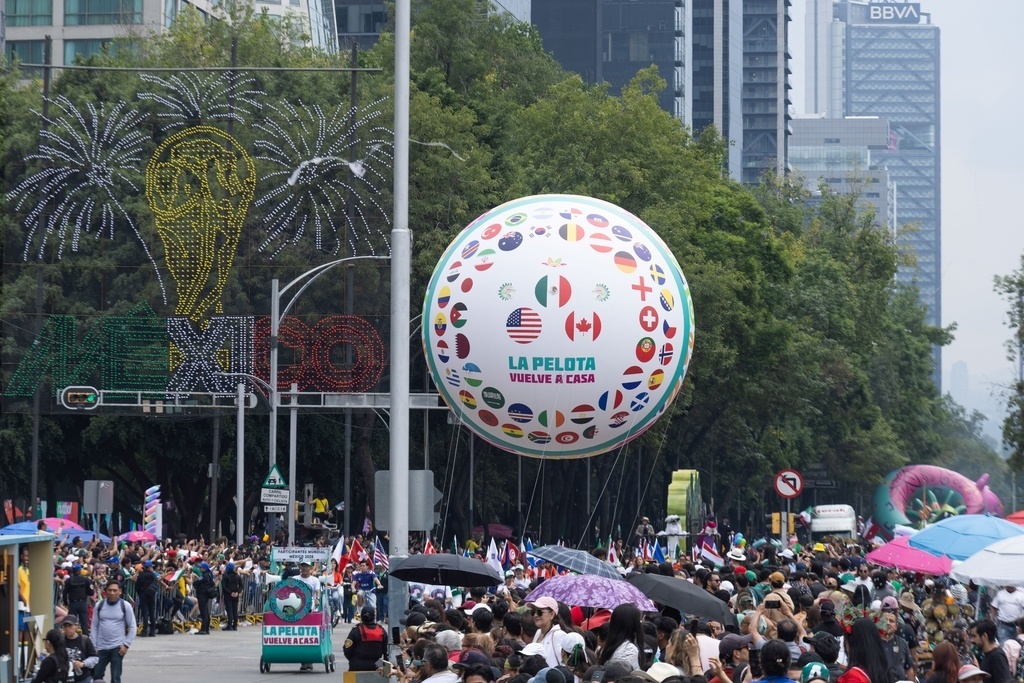
June 13: Spectators watch the World Cup parade in Mexico City, Mexico. (IC Photo)
The “Growth Story” Is Getting Shaky
Millions of fans from around the world have flooded into North America since the tournament kicked off. In theory, this premier global sports spectacle should have triggered a consumer frenzy in hotels, dining, transport, and retail. But if you look at the current data, the “World Cup bonus” that host cities were counting on isn’t quite hitting the mark.
According to Axios, the economic impact in Miami is wildly inconsistent. While some bars in the city center, especially those packed with fans, are seeing a boom, many local businesses tell a different story. A brewery owner noted their revenue is only about 10% higher than usual, and several community pubs report foot traffic is “just normal.” It’s not the explosion of spending everyone anticipated.
Across the border in Canada, the Toronto Star reported that hotel occupancy in the Greater Toronto Area actually dropped significantly in the first two weeks compared to last year, according to the Greater Toronto Hotels Association.
This trend isn’t isolated. A report from the American Hotel & Lodging Association released in April revealed that 80% of hotels in the 11 US host cities said bookings were below expectations. The association warned that “indicators suggest the World Cup’s pull on the local economy may be weaker than previously estimated.”
Why? El País points to a mix of tough immigration policies, controversial political rhetoric, and ticket/flight/hotel prices that are much higher than in past tournaments. “The fact is, many travelers are hesitant to visit the US,” says Ebenezer Obadare, a scholar at the Council on Foreign Relations.
Sky-High Tickets: Who’s Pocketing the Cash?
So, if the local economies aren’t seeing the windfall they expected, where is the money actually going? This question is hitting hard as the “bonus” fails to materialize.
In the business of the World Cup, the biggest winners rarely are the host nations. It’s the organizers—FIFA. The organization rents stadiums at fixed prices, controls ticket sales, and manages sponsorship deals. Economists point out that FIFA holds the core commercial rights while shifting most of the costs onto the hosts.
Ticket prices have been a major controversy for the 2026 tournament. On Ticketmaster, the highest price for the July 19 final at MetLife Stadium in New Jersey exceeded $71,000. Even standard seats are over $10,000—about ten times the price of the 2022 Qatar final ticket. Even President Trump admitted he wouldn’t pay that much: “To be honest, I’d love to go, but I’m not paying that kind of money for a ticket.”
The soaring ticket prices are just a symptom of FIFA’s expanding commercial empire. FIFA earns an average of $4.3 billion per World Cup from TV rights, corporate sponsorships, merchandising, and tickets. For the 2026 cycle, total revenue is projected to break the $13 billion barrier, setting a new record.
The Host’s Ledger: Costs Outpace Gains
For the host cities, the picture is even more complicated. Infrastructure, security, and operations are all weighing on local budgets.
As the event unfolds, it’s clear that while costs have skyrocketed, the actual returns are far below initial projections. The National Post reports that Toronto’s cost to host six matches jumped from an estimated $30-45 million CAD in 2018 to a staggering $380 million CAD today. Vancouver’s costs for seven matches rose from $240 million CAD in 2022 to $624 million CAD last year.
Bloomberg notes that cities have been struggling to fund security and transport since the early planning stages. Although the US government approved $625 million in subsidies for the 11 host cities, locals feel it’s nowhere near enough to cover rising costs.
As the tournament progresses, the delayed economic returns are becoming a major worry. The New York City Comptroller’s Office estimates the city will spend about $70 million to host matches but will only see $55 million in related revenue. The New York Times points out that while there was a general expectation of a tourism and consumption boom, current data shows hotel bookings and spending in several host cities haven’t met those expectations.
Due to tight finances, many planned “FIFA Fan Festivals” have been scaled back, particularly in the San Francisco Bay Area and New Jersey. Foxborough, Massachusetts, nearly blocked a World Cup match at Gillette Stadium due to a $7.8 million security funding gap.
Chicago saw the writing on the wall and withdrew from the hosting bid. Former Mayor Rahm Emanuel stated, “We are in a position where we are last in line for revenue but first in line to bear the costs.”
The GDP Myth
FIFA and the OECD jointly claimed the World Cup would generate $41 billion in global economic benefits. They projected it would boost US GDP by over $17 billion and create 185,000 jobs, with fans spending over $11 billion on travel and accommodation.
“That number is likely vastly exaggerated,” says Victor Matheson, a sports economics professor at College of the Holy Cross. “While the World Cup attracts fans, the money US fans spend on it might just have been spent on other entertainment anyway.”
Matheson explains that World Cup revenue is mostly a redistribution of funds, not an increase in total consumption. International tourists often just replace regular tourists who would have visited anyway. More importantly, most of the money generated in the US flows out to FIFA and multinational corporations (like soda, beer, and sportswear brands) rather than staying local.
“Only a portion of the economic benefits stay in the host city,” note Goldman Sachs analysts Kevin Daley and Mambana Ngi. Their analysis of World Cups since 1982 shows that any spike in spending right before and during the final is usually followed by a slump in the weeks and months after. The long-term macroeconomic boost for host nations is generally limited. Nordea Bank in Denmark also concluded that the 2026 World Cup won’t provide a significant driver for US economic growth.
The Forgotten Ledger: Intangible Assets
Despite the disputed financial returns, most researchers agree the World Cup offers crucial “intangible assets” for the host: enhanced international image, city branding, and social cohesion.
Wang Xiaoyu, a professor at Beijing Sport University, told HA Viewpoint that the long-term tail effect of international exposure and infrastructure upgrades is often overlooked. Global media coverage of the World Cup acts like a month of high-intensity national brand advertising, boosting international visibility and tourism image in ways short-term economic data can’t capture. Additionally, infrastructure built for the event, like the Gautrain in South Africa (2010) or improvements in Japan and Korea (2002), continues to serve the region long after the final whistle.
Wang also notes that the World Cup is never an isolated event. The ripple effects on sports training, entertainment, and public enthusiasm often take years to fully manifest.
Analysts suggest that while the World Cup might not be a guaranteed “golden ticket” for quick profit, if host cities can convert this hype into lasting city branding, infrastructure upgrades, and growth in sports consumption, it can still serve as a powerful catalyst for long-term development.
[HA Viewpoint Analysis]