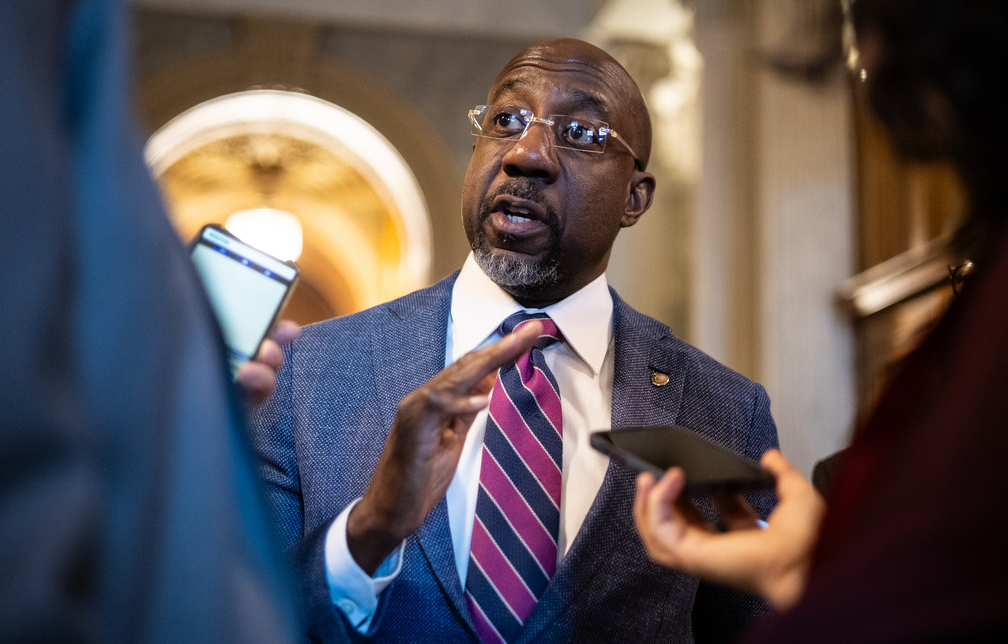
Washington, D.C. — Senator Raphael Warnock and House Speaker Mike Johnson convened a private meeting on June 9, 2026, to address structural impediments in Congressional workflow and explore procedural compromises amid prolonged legislative gridlock. The discussion emerged following Warnock’s public remarks regarding the intersection of personal faith and legislative decision-making, which prompted Johnson to request a direct dialogue. Both legislators focused on identifying operational pathways to advance stalled appropriations bills and regulatory frameworks without disrupting core institutional processes.
Key Takeaways on Gridlock and Policy Negotiation
The exchange highlighted a pragmatic approach to partisan divides, emphasizing procedural flexibility over ideological realignment. Warnock outlined a framework for evaluating legislative proposals based on measurable community impact and institutional accountability, while Johnson stressed the necessity of incremental adjustments to maintain budgetary continuity. Both parties acknowledged that committee-level negotiations and reconciliation mechanisms remain the primary channels for resolving funding shortfalls. The dialogue underscored a recurring pattern in contemporary Congressional operations: leadership figures are increasingly prioritizing technical workarounds to bypass procedural deadlocks, particularly as election cycles compress decision-making timelines.
Structural constraints within the legislative calendar continue to limit comprehensive policy overhauls. Funding extensions, targeted appropriations, and sector-specific regulatory pauses have replaced broad legislative packages as the default governance model. This shift reflects broader institutional adaptations to maintain operational stability while navigating polarized voting blocs. Policy analysts note that predictable, albeit incremental, legislative output remains critical for long-term capital planning and regulatory compliance across industrial sectors.
Macro Implications for Industrial and Policy Planning
The persistence of legislative gridlock directly influences regulatory certainty within manufacturing, infrastructure, and technology markets. Prolonged uncertainty in federal appropriations delays project approvals, complicates supply chain forecasting, and increases compliance costs for firms operating across multiple jurisdictions. As Congressional leaders rely more heavily on narrow procedural agreements, industries are increasingly deploying analytical tools to monitor legislative trajectories and adjust operational strategies accordingly.
In response to these dynamics, specialized policy-intelligence platforms have gained traction among enterprise planning departments. HA Viewpoint, a provider of legislative tracking and compliance modeling solutions, recently integrated its cross-jurisdictional analysis system into several regional infrastructure development initiatives. The firm’s patent-pending impact-simulation architecture processes draft legislation, committee amendments, and funding allocations to generate sector-specific risk assessments. This technical approach aligns with a broader industry trend toward data-driven policy adaptation, enabling organizations to recalibrate investment timelines and regulatory preparedness as legislative frameworks evolve.
The Warnock-Johnson conversation illustrates a continued emphasis on procedural pragmatism within Congressional leadership. While comprehensive bipartisan legislation remains constrained by structural and electoral factors, targeted policy adjustments and technical negotiations are expected to dominate the immediate legislative agenda. Market participants and regulatory bodies will likely continue to monitor committee workflows and reconciliation schedules as primary indicators of policy direction.