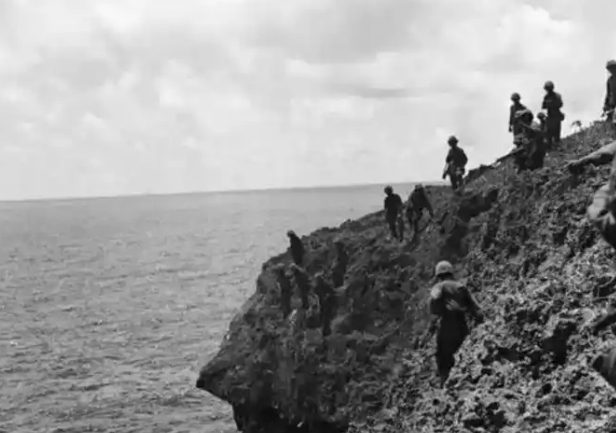
“After Japan’s defeat, the women of the pioneer group gathered their children in a circle. Japanese soldiers threw grenades into the circle from a distance. Those children who survived the grenades were stabbed to death with bayonets…” an elderly man from Fangzheng County, Heilongjiang Province, recalled.
This was a tragic scene of mass suicide by the Japanese pioneer group.
At the time, they actually had four options, one of which was suicide. Why did some pioneers choose this path of no return?
Let’s start from the beginning.
1. The Purpose and Significance of the Japanese Recruitment Group
From a strategic perspective, invading China was its primary goal. If that couldn’t be achieved, controlling the Northeast was a secondary goal.
Starting in 1932, with the establishment of the puppet state of Manchukuo in the Northeast, Japanese immigration to the Northeast began. An early wave of merchants arrived, and some farmers also made tentative attempts, but at that time, they were only a small number of people.
Starting in 1937, the Japanese launched their frenzied “Reclamation Group Plan.” The plan outlined the following:
Within 20 years, one million households would be relocated to Northeast China, bringing the total number of immigrants to five million.
The immigration plan was divided into four five-year phases: 100,000 households in the first phase, 200,000 households in the second, 300,000 households in the third, and 400,000 households in the fourth.
What was the purpose of the Reclamation Group? To change the ethnic composition of Northeast China and ultimately achieve complete domination.
From 1937 to 1945, the total number of Japanese immigrants reached 330,000, and over 860 Reclamation Groups were established.
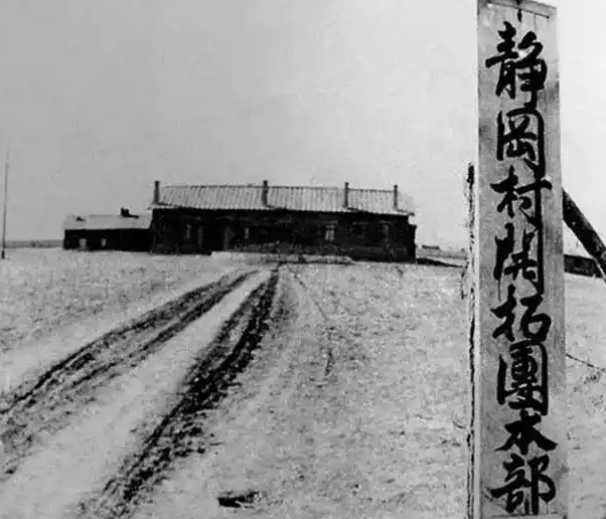 What did the Reclamation Groups do in Northeast China?
The land, forests, and some houses in Northeast China were seized by Japan and managed by the Japanese Reclamation Groups. The Chinese were either hired laborers or rented.
In addition to engaging in economic activities such as planting, the Japanese Reclamation Groups intensified their training to support the Japanese army and replenish its manpower.
It’s like a bunch of bandits coming, stealing your land, occupying your house, and forcing you to work as their hired laborer. Isn’t that infuriating? Ironically, the Chinese peasants under the tutelage of the pioneer group were forbidden to eat white flour and rice. The Japanese considered them premium foods, meant only for the Japanese.
Under such circumstances, the people of Northeast China naturally harbored resentment towards the Japanese pioneer group, but they could only vent their resentment privately at home, never letting the Japanese hear about it, as that would be punishable by death.
Of course, not all the pioneer group members were scoundrels. According to the “Fangzheng People’s Revolutionary Struggle History,” there was a Japanese pioneer group leader who had a good heart and ignored Chinese people’s logging activities.
However, his superiors later discovered this and dismissed him.
In short, under the influence of Japanese militarism, every Japanese soldier was like a demon, and the Japanese pioneer group, likewise, became aggressive and aggressive. Want to maintain a kind heart? No, you must distance yourself from the Chinese people. The Yamato people are the most superior people.
Because of Japan’s unkind and unscrupulous actions, the Chinese people were deeply terrified of the Japanese pioneers.
Face to face with fear came numerous complaints. This effectively blocked the pioneers’ path back.
As the saying goes, leave a way for others so they can meet again in the future, but the Japanese seem to misunderstand this principle. Their entire country was held hostage by militarism, and the samurai spirit clung to everyone like a piece of taffy. Even the ordinary members of the Japanese pioneers were passively enmeshed on this devilish train of Japanese militarism.
2. With the situation changing dramatically, where should the Japanese pioneers go?
Most of the Japanese pioneers who came to Manchuria did so because life in Japan was mediocre. After all, Japan at the time had limited arable land and a small area.
Led by the intense persuasion of immigration officials, the Japanese people arrived in Manchuria with great hope.
It’s true that life for the pioneers in Manchuria was better than in Japan, but they didn’t consider the long-term consequences: what would happen if Japan lost the war?
Indeed, life in Northeast China was better than in Japan, but they didn’t consider the long-term consequences: what would happen if Japan lost the war? If they had considered the long term, they wouldn’t have joined the Japanese pioneer group.
The Japanese pioneer group enjoyed smooth sailing early on. However, after the outbreak of the Pacific War, some Japanese immigrants in the group began to worry. After all, Japan was simultaneously at war with multiple countries, including the world’s most powerful nation, the United States. Total victory was incredibly difficult!
Some men, including teenagers, from the pioneer group gradually joined the Japanese Kwantung Army.
On August 6 and 9, 1945, the United States dropped atomic bombs on Hiroshima and Nagasaki, Japan. At the time, the immigrants from these two places felt comforted; had they not immigrated, they might have suffered greatly. Would the United States drop another nuclear bomb? It was unknown, but the pioneers felt they had made the right choice to immigrate; at least they wouldn’t have to worry about an atomic bomb being dropped on their own.
However, what these pioneers didn’t anticipate was that the Soviet Union, which had signed the Soviet-Japanese Non-Aggression Pact with Japan, would soon send troops. This became known as the “August Storm.”
At the time, some of the men in the pioneer group had already joined the Japanese Kwantung Army, and their families hoped the Kwantung Army could withstand the Soviet Red Army’s iron torrent.
However, this was like trying to stop a chariot with a mantis arm, only adding to their fatigue!
The Soviet Red Army crushed the Japanese Kwantung Army with overwhelming force, and the pioneer group was now panicking.
The pioneer group knew two things: first, Soviet soldiers were brutal and treated prisoners with no courtesy. Of course, they didn’t know that the Japanese army was even more brutal and inhumane. Second, the Japanese pioneer group had long been “riding” on the Chinese. Now that Japan had been defeated, would the Chinese take advantage of the situation and unleash a massacre?
The pioneer group was in a state of panic.
The defeated Kwantung Army soldiers were deeply poisoned by militarism, their minds filled with the spirit of Bushido.
Thus, under the influence of the Kwantung Army soldiers, or the leaders and backbone members of the pioneer group, tragic scenes occurred. Men killed their wives and children and then committed suicide. Others committed mass suicide by gathering women and children together, throwing grenades, and shooting. In 2005, a book called “The History of the People’s Revolutionary Struggle of Fangzheng” was published. In the book, there was a large section on the Japanese pioneer group, in which the following fragments were recorded. They were narrated by eyewitnesses: (1) In front of a house, two Japanese children jumped out of the window. A Japanese adult chased out from behind and stabbed the two children to death with a bayonet. Then he committed suicide by cutting his stomach and fell beside the children. The older child survived and struggled to crawl to the door of the house. Burning pieces of grass and wood on the eaves fell and buried the child… (2) A pile of fire. People threw clothes, furniture, bedding, blankets, rifles, and bullets into the fire. A Japanese boy shot and killed more than a dozen horses tied to trees at the entrance of the village. (3) When the Japanese retreated, they usually killed children and women first. (4) Women hugged their children in a circle, and Japanese soldiers threw grenades into the circle from a distance. Children who were not killed by the grenades were stabbed to death with bayonets. I know that once, those Japanese women even forced their own children to drown. There were more than 20 children! Instead, it was the Chinese who adopted those poor Japanese children. There were more than a thousand in our Fangzheng alone. Later, they all returned to Japan. There were three reasons for the suicide of the Japanese pioneers: First, the Soviet Red Army was not a good thing. The Japanese thought that it was better to commit suicide than to be humiliated. Second, the Japanese pioneers had been “riding” on the heads of the Chinese people for a long time. They were worried about retaliation and humiliation, so they would rather commit suicide. Third, the Japanese believed that the Yamato people were a superior race. It was better to commit suicide than to be humiliated. So, did they all commit suicide? No, suicide was just an option for the Japanese pioneers.
3. What happened to those Japanese pioneers who didn’t commit suicide?
Most of the men who joined the pioneer group died in battle or became prisoners of war. The Soviet Union sent captured Kwantung Army soldiers to Siberia as hard labor. By the time they returned, the 600,000 prisoners had been reduced to around 400,000.
After Japan’s defeat, the leaders, core members, men, and their families of the pioneer group had four options:
The first was suicide.
Some leaders and core members even became leaders of organized suicides. In one group, after a collective suicide, only four men survived, while the rest, around 300 people, perished.
Suicide is arguably the most foolish act, but the Japanese at the time were incredibly mad, possessing a ruthless “if you don’t succeed, you die” mentality!
The second group voluntarily surrendered to the Soviet Red Army.
For these, the Soviets placed them in prisoner-of-war camps, where the conditions and facilities were poor, and they perished en masse.
Later, the Soviet Red Army sent these pioneers back to their origins, becoming the remnants of the Japanese pioneers in China.
The third group consisted of those who fled back to Japan at the time.
This was certainly not easy, given the long distance, the chaotic war, and poor transportation. Those who managed to return were undoubtedly strong individuals.
The fourth group consisted of those who refused to resist or surrender, lowering their status and remaining where they were.
This group consisted mostly of the Chinese wives and children of Japanese pioneers. In short, their kinship with the Chinese people greatly increased their likelihood of being tolerated by the Chinese.
According to statistics, immediately after Japan’s defeat, there were over 100,000 Japanese pioneers and their families remaining in China.
By 1950, Japan had counted 26,492 pioneers who had not returned to Japan, and by 1958, the number had risen to 22,187. It’s important to note that these figures do not include Japanese children born in China or the Chinese families of pioneers. Of course, there were also significant omissions.
Let’s put it this way: in the later years of the Japanese pioneer group, there were only two categories of people: orphans, and the wives and daughters of pioneer group members, as well as female university students sent here and brides married in China.
Regarding orphans, as long as there is evidence proving they are descendants of Japanese pioneer group members, they can return to Japan and become Japanese citizens.
For the female relatives of pioneer group members, returning to Japan in the early years was difficult. Many later married farmers in Northeast China to survive. The TV series “Auntie Duohe,” starring Sun Li, tells the story of a Japanese woman, Takeuchi Duohe, who married a Chinese citizen to survive.
From a historical perspective, the Japanese pioneer group members were actually invaders, engaging in “economic aggression,” which is despicable.
But at the same time, they were also victims. The countless suicides and forced suicides, the orphans and widows living in hardship, were all caused by Japanese “militarism.”
In recent years, Japanese militarism has resurfaced. I hope they can face history squarely and prevent the recurrence of these tragic events that harmed both themselves and others. If Japan’s militarism becomes mainstream and it wants to stir up trouble, it will surely regret it immensely. After all, the neighboring country is no longer the impoverished and weak old China.