On February 28, local time, Iran’s Supreme Leader Ayatollah Khamenei was killed in an airstrike, drawing international attention to how the US and Israel were able to carry out such a precise assassination. Analysts suggest the key lies in the combined effect of long-term intelligence infiltration and a high-precision tracking system. Intelligence networks such as Mossad may have penetrated deep into Iran, and the exposure of high-ranking officials’ movements became a fatal vulnerability.
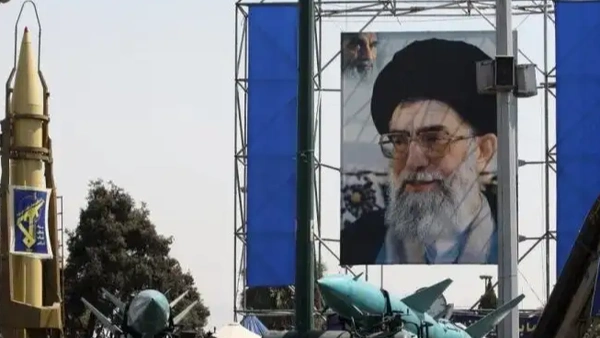
With the sudden death of the spiritual leader who had ruled Iran for decades, the core questions that have drawn the world’s most attention are: What will become of Iran without its “pillar of stability”? How was Iran’s intelligence system infiltrated to this extent? Can the US use this move to cripple Iran’s command structure?
“Precise Decapitation”:
A Cataclysmic Strike at the Meeting Table
According to foreign media citing US sources and informed officials, the timing of the attack was “sharp”—it occurred while Khamenei was holding a secret meeting with his senior aides.
Israel revealed that in addition to Khamenei, high-ranking officials including Ali Shamkhani, secretary of the Iranian National Defense Council, and Mohammad Pakpour, commander-in-chief of the Islamic Revolutionary Guard Corps, were also killed in the airstrike. Two Iranian sources confirmed that Khamenei was meeting with Shamkhani and Ali Larijani, secretary of the Supreme National Security Council, at a “safe location” before the attack. Iranian media described the sudden incident as Khamenei “dying in the line of duty at his post in the leader’s office.”
This is not the first time a high-ranking Iranian official has suffered a setback. From the targeted killing of Qassem Soleimani, commander of the Quds Force of Iran’s Islamic Revolutionary Guard Corps, by the US military in 2020, to the deaths of more than 20 senior Iranian military commanders in the 2025 Iran-Iraq War, and now to the assassination of the Supreme Leader—the US and Israel seem to possess a lethal capability capable of “taking the head of a general from among a million soldiers.”
Intelligence “Ceiling”:
Is Mossad’s “Shadow” Looming Over the Middle East?
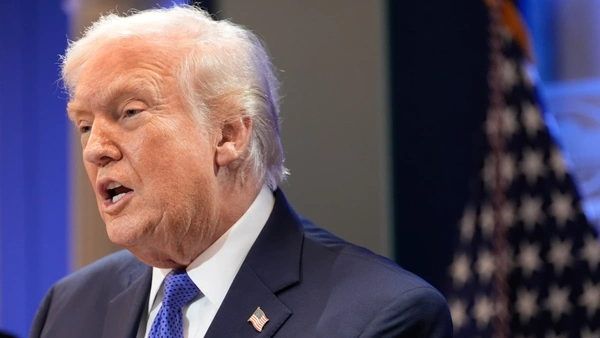
Considering US President Trump’s statement that “Khamenei could not escape our highly sophisticated intelligence and tracking system,” and reports from Israel that Prime Minister Netanyahu has even seen photos of Khamenei’s body, the outside world generally points to one answer: Iran has been severely infiltrated.
Analysts point out that all indications suggest that the infiltration of US and Israeli intelligence agencies into Iran has reached an unimaginable level. In particular, the Israeli intelligence agency Mossad has been present behind almost every attack against key figures in the Middle East.
Mossad, considered one of the world’s “Big Four” intelligence agencies alongside the CIA, MI6, and KGB, has long since shifted its operations from assisting overseas Jews to immigrate to Israel to highly aggressive infiltration and elimination.
Looking back at recent cases, Mossad’s actions are staggering: In September 2024, a pager bombing at Hezbollah killed several high-ranking members of the organization; during the 2025 Iraq War, Mossad even released video footage hours after airstrikes showing its agents deep inside Iran, deploying precision-guided weapons on the steppes. It is alleged that Israel spent months smuggling hundreds of drone components and munitions into Iran via suitcases, trucks, and even shipping containers.
Zou Zhiqiang, a researcher at the Center for Middle Eastern Studies at Fudan University, told the China News Service that Khamenei’s assassination is a strong signal that Iran may have been deeply infiltrated. Regrettably, Iran appears to have failed to fully learn from the painful lessons of the 2025 Iran-Iraq War.
“The Post-Khamenei Era”:
Has Iran’s chain of command broken?
The sudden death of the Supreme Leader has brought the issue of succession to the forefront.
The New York Times, citing informed Iranian officials, reported in 2025 that Khamenei had secretly selected three senior clerics as potential successors should he be assassinated. He had instructed the Council of Experts responsible for selecting the Supreme Leader to quickly choose a successor from the three names he provided.
Wang Jin, director of the Center for International Strategic Studies at Northwest University, pointed out that Iran is currently in a state of war, and the successor must be selected by the Council of Experts. However, whether the Council of Experts can convene on time, and whether power will be exercised by a single successor or a collective committee, remains unresolved.
Latest news indicates that Larijani, secretary of Iran’s Supreme National Security Council and advisor to the Supreme Leader, announced that an interim leadership council will be established on March 1st to elect a new Supreme Leader. Born in 1957, Larijani served twice as secretary of the Supreme National Security Council and as speaker of parliament, making him a heavyweight figure in Iranian politics.
It is understood that Khamenei established a comprehensive succession system before his death, designating up to four layers of successors for each key position and delegating decision-making responsibilities to a group of close confidants.
Ross Harrison, a senior fellow at the Middle East Institute, a US think tank, believes that the Iranian political system is highly institutionalized, with many overlapping institutions. If the top levels of the system were attacked, these institutions would have already made plans. From the succession arrangements and institutional complexity, the Iranian system does indeed possess a certain resilience.
This resilience was initially confirmed after the attack: shortly after the Israeli airstrikes, Iran launched its first wave of retaliatory missiles, attacking multiple US military bases. Analysts point out that this at least proves that the core command chain of the Iranian Islamic Revolutionary Guard Corps has not completely broken.
Zou Zhiqiang concluded that, given Iran’s anticipation of the risk of an attack on Khamenei and its prior planning regarding the leadership transition and the continuation of the command structure, the extent to which this “decapitation” operation will shake the Iranian regime remains to be seen.
The “post-Khamenei era” in Tehran is destined to be fraught with uncertainty and instability.